In the news:
In their battle against the bulge, desperate dieters have tried drugs, surgery, exercise, counseling, creams and even electrical fat-burning belts.
Don't forget outrunning rabid wolverines. That makes the fat melt right off. They've got to be rabid, though. Otherwise, they're just
too adorable.
Now some psychologists have a new idea: Lying.
Like, "I've got big bones"? "The camera adds 50 pounds"? "I'm retaining water"? "Slow metabolisms run in my family"?
A team led by psychologist Elizabeth Loftus of the University of California, Irvine, found that it could persuade people to avoid fattening foods by implanting an unpleasant childhood memory about the food -- even though the event never happened.
You mean those memories of my Scottish grandmother's potted head--a gelatinous meat dish she made, not her actual head--maybe
they were implanted? What about the memory I have of being a secret agent and going to Mars?
In a paper published in today's edition of the Proceedings of the National Academy of Sciences, the team said it successfully turned people off strawberry ice cream. In earlier studies, the team has done the same with pickles and hard-boiled eggs -- in each case, by manipulating the subjects to believe the foods made them sick when they were children.
The scientists say they have also successfully implanted positive opinions about asparagus by convincing subjects that they once loved the vegetable.
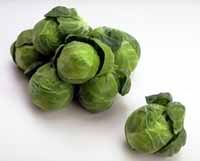
What about brussels sprouts? C'mon--that's impossible!
Nobody likes brussels sprouts!
The method, if perfected, could induce people to eat less of what they shouldn't and more of what they should, Loftus said. Good memories about fruits and vegetables -- and bad ones on low-nutrient, high-calorie foods -- could be implanted.
Along with whom to vote for in the next election.
In the strawberry ice cream experiment, Loftus and her team asked 131 students to fill out forms about their food experiences and preferences, including questions about their experiences with strawberry ice cream.
The subjects were then given a computer analysis of their responses that was supposed to indicate their "true" likes and dislikes.
A group of 47 students, however, were also inaccurately told that the analysis made it clear they had gotten sick from eating strawberry ice cream as a child. Of these, almost 20 percent later agreed on a questionnaire that they had, in fact, been sickened by the treat and that they intended to avoid it in the future. ...
OK, this is now officially creepy.
Deliberately implanting memories also "raises profound ethical questions," said Stephen Behnke, director of the ethics office of the American Psychological Association.
Ya think?
"Say, for example, we could change a person's belief about their entire childhood," he said. "Would doing so be ethical?"
Seriously, I
did go to Mars, right? The miners were on strike, and I think I may have killed Sharon Stone.
... Scientists have so far failed to implant false beliefs about two common food items, chocolate chip cookies and potato chips. --The Los Angeles Times
Oh, the power of cookies. It cannot be stopped.
Pardon me a moment as I run to Fairway and pick up some brussels sprouts. God, I love those little things--tiny green nuggets of sulphury goodness.




 Gary Cooper
 Winnie Cooper
 Mini Cooper
 Mini Me
 Dinah Shore
 Pauly Shore
 Jersey shore